From Meiji-era magazines to Sailor Moon and Fruits Basket, discover how shojo manga revolutionized comics, invented a unique visual language, and amplified women's voices in the manga industry.
What "Shojo" Actually Means
The word shojo (少女) does not simply mean "girl." It emerged during the Meiji era (1868–1912) to describe a specific social category: adolescent girls old enough for school but not yet married, associated with innocence, purity, and grace. When we talk about shojo manga, we are not talking about a genre in the strict sense (romance, fantasy, horror). We are talking about a demographic: manga created for an audience of young girls and young women.
This distinction matters. Under the "shojo" label, romantic comedies coexist with Shakespearean tragedies, magical girl stories with psychological dramas, historical epics with pure horror. What unites them is not a theme but a perspective, a way of telling stories through interiority, emotion, and human connection.
And despite a stubborn misconception, shojo manga is not "comics for girls that only girls read." Its influence reshaped the entire medium, from page composition to the psychological depth of characters, to representations of gender and sexuality. To tell the story of shojo is to tell the story of a quiet revolution.
The Roots: When Girls Got Their Own Magazines (1902–1945)
The history of shojo manga begins long before manga itself. In 1902, Japan launched Shojo-kai (少女界), the first magazine aimed exclusively at young girls. Others followed quickly: Shojo Sekai (1906), Shojo no Tomo (1908), Shojo Gaho (1912), then the famous Shojo Club (1923).
These magazines did not yet publish manga in the modern sense. Their content relied on shojo shosetsu (少女小説), illustrated novels and poems exploring passionate friendship between girls, adolescent melancholy, and the beauty of the ephemeral. The writer Nobuko Yoshiya, with her Class S stories centered on romantic friendships between schoolgirls, laid the thematic foundations of what would become shojo manga decades later.
But it was the illustrators who forged the founding aesthetic. Yumeji Takehisa, Jun'ichi Nakahara, and Kasho Takabatake drew elegant female figures with large, expressive eyes, dressed with care, influenced by Art Nouveau and Nihonga. Those enormous eyes, those slender silhouettes: this was the original visual code of shojo, long before manga adopted it.
In the 1930s, Katsuji Matsumoto bridged the gap between illustration and sequential art with works like Kurukuru Kurumi-chan (1938), introducing cinematic techniques and an Art Deco style into girls' manga. But the Second Sino-Japanese War (1937) and then World War II devastated the industry. By 1945, only two shojo magazines remained standing: Shojo Club and Shojo no Tomo.
The Postwar Era and the Birth of Modern Manga (1945–1969)
The Magazine Revival
The reconstruction was swift. From 41 magazines in 1945, Japan grew to nearly 400 by 1952. Publishers multiplied from 300 to 2,000 in just a few years. Kashihon (貸本), rental bookshops where readers could borrow a manga for five to ten yen (about half the price of a subway ticket), became a major distribution channel, making manga affordable for everyone.
It was in this context that the two magazines destined to dominate shojo for decades appeared: Nakayoshi (なかよし, Kodansha, 1954) and Ribon (りぼん, Shueisha, 1955). Manga claimed a growing share of their pages: from 20% of content in the 1950s to over 50% by the end of the decade.
Princess Knight: The Big Bang of Shojo Storytelling
In 1953, Osamu Tezuka, the "God of Manga," published Princess Knight (リボンの騎士, Ribon no Kishi) in Shojo Club. It was a seismic event. For the first time, a girls' manga adopted the form of the story manga: a long narrative structured in chapters, with continuity and characters who evolved.
Sapphire, a princess born with both a boy's heart and a girl's heart, raised as a prince to protect the throne, is a foundational figure. She synthesizes two archetypes that had inhabited shojo since its origins: the otenba (お転婆), the bold tomboy, and the cross-dresser, the heroine disguised as a man. Tezuka, a devoted fan of Takarazuka, the all-female theater troupe where women also play male roles, injected this gender fluidity into manga. It was a seed that never stopped growing.
From Men to Women: The Transition of the 1960s
Until the late 1950s, shojo manga was created primarily by men. Leiji Matsumoto (future creator of Captain Harlock), Shotaro Ishinomori (Cyborg 009), Kazuo Umezu (master of horror), and Tetsuya Chiba all drew for girls' magazines before migrating to shonen. Their heroines were often passive, tragic figures trapped in sentimental melodramas.
But in the 1960s, television upended the landscape. To survive the competition, monthly magazines went weekly: Shojo Friend and Margaret led the charge. Publishers launched amateur reader contests to discover new talent, and it was through this door that women stormed in.
In 1964, Machiko Satonaka published Pia no Shozo (Portrait of Pia) in Shojo Friend. She was sixteen years old. Her arrival marked the beginning of an irreversible transformation: within a decade, women would go from the minority to nearly all shojo creators.
Other pioneers pushed the boundaries:
- Hideko Mizuno adapted Hollywood films into manga (Sutekina Cora, based on Sabrina, 1963) and published in Fire! (1969–1971) the first sex scene in shojo manga.
- Chikako Urano created Attack No. 1 (アタックNo.1, 1968–1970), the first female sports manga, where the heroines were physically active and combative, a radical contrast with the passive figures of previous decades.
- Kazuo Umezu, one of the last men still active in shojo, published Reptilia (1965) and established horror as a legitimate subgenre, with grotesque and terrifying female figures that shattered the aesthetic of sweetness.
By the end of the 1960s, the stage was set for a revolution.
The Year 24 Group: The Revolution (1970–1979)
The "Magnificent Forty-Niners"
In the early 1970s, a generation of young women born around 1949 (Showa 24 in the Japanese calendar) burst into shojo manga and rewrote its rules. They would be called the Year 24 Group (24年組, Nijuyo-nen Gumi), or the "Magnificent Forty-Niners."
Their informal headquarters: the Oizumi Salon (1971–1973), a house rented in the Oizumigakuencho neighborhood of Nerima (Tokyo) by Moto Hagio and Keiko Takemiya, where artists gathered to create, debate, and share influences: European literature, French New Wave cinema, American rock, German coming-of-age novels. It was an intellectual crucible without precedent in manga.
What these women introduced into shojo was staggering:
- Science fiction: Moto Hagio published They Were Eleven (1975), a locked-room space thriller of rare narrative intelligence.
- Historical drama: Riyoko Ikeda created The Rose of Versailles (1972–1973), the first major historical epic in shojo, set in the France of Marie Antoinette.
- Fantasy: invented worlds of unprecedented complexity replaced the familiar Japanese school settings.
- Psychological horror: dread and unease replaced cheap monsters.
- Boys' love: Keiko Takemiya with In the Sunroom (1970) and Moto Hagio with The Heart of Thomas (1974) explored love between boys, founding a subgenre that would become a global cultural phenomenon.
- Yuri: Ryoko Yamagishi published Shiroi Heya no Futari (1971), considered the first manga to depict a romantic relationship between women.
The Key Figures
Moto Hagio may be the most important. The first female shojo manga artist to receive Japan's Medal of Honor, she created The Poe Clan (1972), a vampire saga spanning centuries, and The Heart of Thomas, a masterpiece on love, guilt, and sacrifice set in a German boarding school. Her science fiction explored identity, loneliness, and difference with a philosophical depth that forced critics, who had previously dismissed shojo, to take the genre seriously.
Keiko Takemiya pushed the boundaries of representation. Her Kaze to Ki no Uta (The Poem of Wind and Trees, 1976) is considered the founding work of yaoi: a devastating story about the relationship between two boys in a 19th-century French boarding school, confronting sexuality, rape, drug addiction, and racism head-on. The work earned her the Shogakukan Prize in 1979, alongside Toward the Terra, her grand science fiction epic.
Riyoko Ikeda, a political activist and member of the Japanese Communist Party, created The Rose of Versailles (ベルサイユのばら, 1972–1973), the first major critical and commercial hit in shojo. Oscar François de Jarjayes, a woman raised as a man and commander of the Royal Guard, is a character of revolutionary gender ambiguity. The work was a phenomenal success, later adapted into an anime, a film, and a musical by the Takarazuka troupe, completing the circle back to Tezuka's original inspiration.
Yumiko Oshima popularized the catgirl archetype and used a "kawaii" aesthetic to explore themes of unexpected depth. Her Wata no Kunihoshi (1978) won the Kodansha Prize.
The Year 24 Group did not simply improve shojo manga. They rebuilt it from the ground up, transforming a simple entertainment for young girls into an art form capable of rivaling literature.
A Visual Revolution
The Year 24 Group's contribution was not only narrative; it was graphic. These artists invented a new visual language:
- Shattered panels: they abandoned the rigid rectangular grids inherited from Tezuka. Panels overlap, overflow, vanish. Characters float between frames, freed from spatial constraints.
- Refined linework: thinner, lighter, more elegant lines than the dynamic shonen style.
- Narrative white space: empty space (mahaku) became a tool for emotional expression. Silence on the page spoke as loudly as the drawing.
- Visual interior monologue: text left the speech bubbles to scatter across the page like lines of poetry, expressing the characters' innermost thoughts.
- Frameless faces: close-ups of faces emerged directly from the white of the page, without panels, without backgrounds. Pure emotion.
These innovations did not stay confined to shojo. They spread throughout all of manga, influencing shonen and seinen artists for decades. The page composition of Takehiko Inoue's Vagabond or Naoki Urasawa's Monster owes more to the Year 24 Group than to Tezuka.
The Big Eyes: Anatomy of a Symbol
No discussion of shojo is complete without the eyes. Those enormous irises, studded with stars, crossed by reflections and colors, called dekame (デカ目, literally "big eyes"), are the genre's visual signature.
Their origin is layered. Tezuka, inspired by the theatrical makeup of Takarazuka actresses and by Disney characters, already drew enlarged eyes in the 1950s, but with a simple black dot for a pupil. In the kashihon circuit, Macoto Takahashi drew on dolls and the illustration of Jun'ichi Nakahara to create eyes adorned with elongated lashes, star-shaped reflections, and multicolored irises. By the late 1950s, Miyako Maki adopted and brought this style into the mainstream.
From the 1970s onward, the eyes became a language in their own right:
- Their size indicates how closely the reader is meant to identify with the character: the larger the eyes, the more you are invited to feel what they feel.
- Their complexity (concentric circles, stars, multiple reflections, color gradients) conveys the character's emotional richness.
- The size difference between female characters' eyes (large) and male characters' eyes (smaller) functions as a gender marker.
- Close-ups on eyes became narrative moments in their own right, windows opened onto the inner self.
It is no coincidence that this visual code conquered the world. From Saint Seiya to The Rose of Versailles, from Sailor Moon to Fruits Basket, the big eyes of shojo have become one of the most recognizable hallmarks of Japanese visual culture.
Shojo Is Only About Feelings? It Is More Complicated Than That
Ningen Kankei: Human Relationships at the Core
The Japanese concept of ningen kankei (人間関係, "human relationships") is the beating heart of shojo manga. Where shonen stages battles, competitions, and quests for power, shojo explores the bonds between people: friendship, love, rivalry, family, betrayal, forgiveness.
This is not a question of "softness" versus "action." It is a difference in narrative focus. Shojo looks inward: conflicts play out in hearts and conversations rather than on battlefields. Resolution comes through dialogue, understanding, and emotional transformation rather than brute force.
Gender and Sexuality: A Space for Experimentation
Since its origins, shojo manga has been a space where gender norms are questioned, overturned, and deconstructed:
- The otenba (tomboy) has been present since prewar manga in every form: fighting girl, cross-dressed heroine, princess raised as a prince.
- The 1947 Constitution, guaranteeing gender equality, normalized nonconforming characters in postwar Japan.
- Bishonen (美少年, "beautiful boys") characters, androgynous, graceful, often ambiguous, became a central figure in shojo from the 1970s onward.
- The representation of sexuality evolved dramatically: from early scenes modestly veiled under bedsheets (to circumvent censorship banning pubic hair and genitalia) to the explicit depictions of the 1990s.
Shojo manga is also the birthplace of boys' love (yaoi) and yuri, subgenres that, beyond their romantic dimension, allow readers to explore gender fluidity and sexuality in an imaginary space free from patriarchal constraints.
Horror Through a Female Lens
The supernatural has inhabited shojo since the 1950s and the horror magazine Kaidan (1958). But shojo horror has its own codes: yurei (ghosts), oni (demons), and yokai (spirits) are often female, and the stories explore jealousy, rage, and frustration, emotions forbidden to "good girls" in Japanese society.
A recurring motif: the mother-daughter conflict, the mother transformed into a demonic figure, the daughter of a demon searching for identity. Shojo horror is an outlet, a space where readers can "freely explore feelings of jealousy, anger, and frustration" usually absent from the cute-melancholic stories of the mainstream.
Urban legends, Kuchisake-onna (the slit-mouthed woman), Hanako-san (the toilet ghost), Teke Teke, found fertile ground in 1970s shojo, fed by the stories teenage girls whispered to each other.
Magical Girls: From Shojo to Global Phenomenon
From Little Witches to Warriors
The magical girl subgenre (魔法少女, maho shojo) was born in the early 1960s with Himitsu no Akko-chan (1962), the first manga of the genre, and Sally the Witch (Mahotsukai Sally, 1966), the first anime, inspired by the American sitcom Bewitched.
During the 1970s, Toei Animation dominated with "majokko" (little witch) series like Mahotsukai Chappy (1972) and Majokko Megu-chan (1974). In the 1980s, the term maho shojo appeared officially with Lalabel (1980), and the genre diversified with Minky Momo (1982) and Creamy Mami (1983), where heroines transformed into adult versions of themselves.
The Sailor Moon Revolution
Then came 1991. Naoko Takeuchi published Sailor Moon (美少女戦士セーラームーン) in Nakayoshi, and the genre exploded.
What Sailor Moon changed: the fusion of the magical girl with tokusatsu (live-action superhero shows like Kamen Rider and Super Sentai). For the first time, magical girls fought, as a team, with offensive powers, against real enemies. Boys became supporting characters. The friendship between the warriors mattered more than romance.
The impact was global. Sailor Moon was exported worldwide and paved the way for a golden decade: Cardcaptor Sakura (CLAMP, 1996–2000), which redefined kindness as a superpower; Magical DoReMi (1999), which brought the genre back to childhood; Tokyo Mew Mew (2000), which injected ecological awareness.
The Deconstruction: From Pretty Cure to Madoka Magica
In the 2000s, Pretty Cure (2004) pushed the combat dimension even further, attracting an audience well beyond young girls. Magical Girl Lyrical Nanoha (2004), originating from an adult visual novel, introduced darker themes: death, the price of magical power.
The culmination of this evolution was Puella Magi Madoka Magica (2011), which deconstructed the genre with devastating psychological darkness. Behind the pink costumes and adorable mascots lurked despair, sacrifice, and the cruelty of fate. Madoka is to the magical girl genre what Evangelion is to mecha: a work that stares the genre in the face and tears it apart.
The 1980s and 1990s: The Age of Diversification
Josei: Growing Up With Its Readers
In 1980, Kodansha launched Be Love, the first manga magazine for adult women: josei manga (女性漫画). Josei distinguished itself from shojo through its adult protagonists, more mature themes (professional life, motherhood, explicit sexuality), and emotional realism. Others followed: Feel Young, You, Young You, Office You, Cookie, Kiss...
Josei is the natural child of shojo: the girls who read Nakayoshi in the 1970s had become the women in their thirties in the 1990s, and they wanted manga that reflected their lives. The very existence of josei proves that shojo created a loyal readership capable of growing up with the medium.
School Romcoms and the Classics of the 1990s
The 1980s saw the explosion of the gakuen rabu-kome (学園ラブコメ), the school romantic comedy, the subgenre that, in the Western imagination, is shojo manga. Love stories between high schoolers, misunderstandings, love triangles, confessions under the cherry blossoms: the formula seems simple, but the best works transcend the cliche through the authenticity of their characters.
In the 1990s, a new wave of mangaka redefined shojo's ambitions:
- Yuu Watase published Fushigi Yugi (1992–1996), an isekai adventure set in ancient China, and Ayashi no Ceres (1996–2000), a dark supernatural thriller.
- Naoko Takeuchi turned Sailor Moon into a worldwide phenomenon.
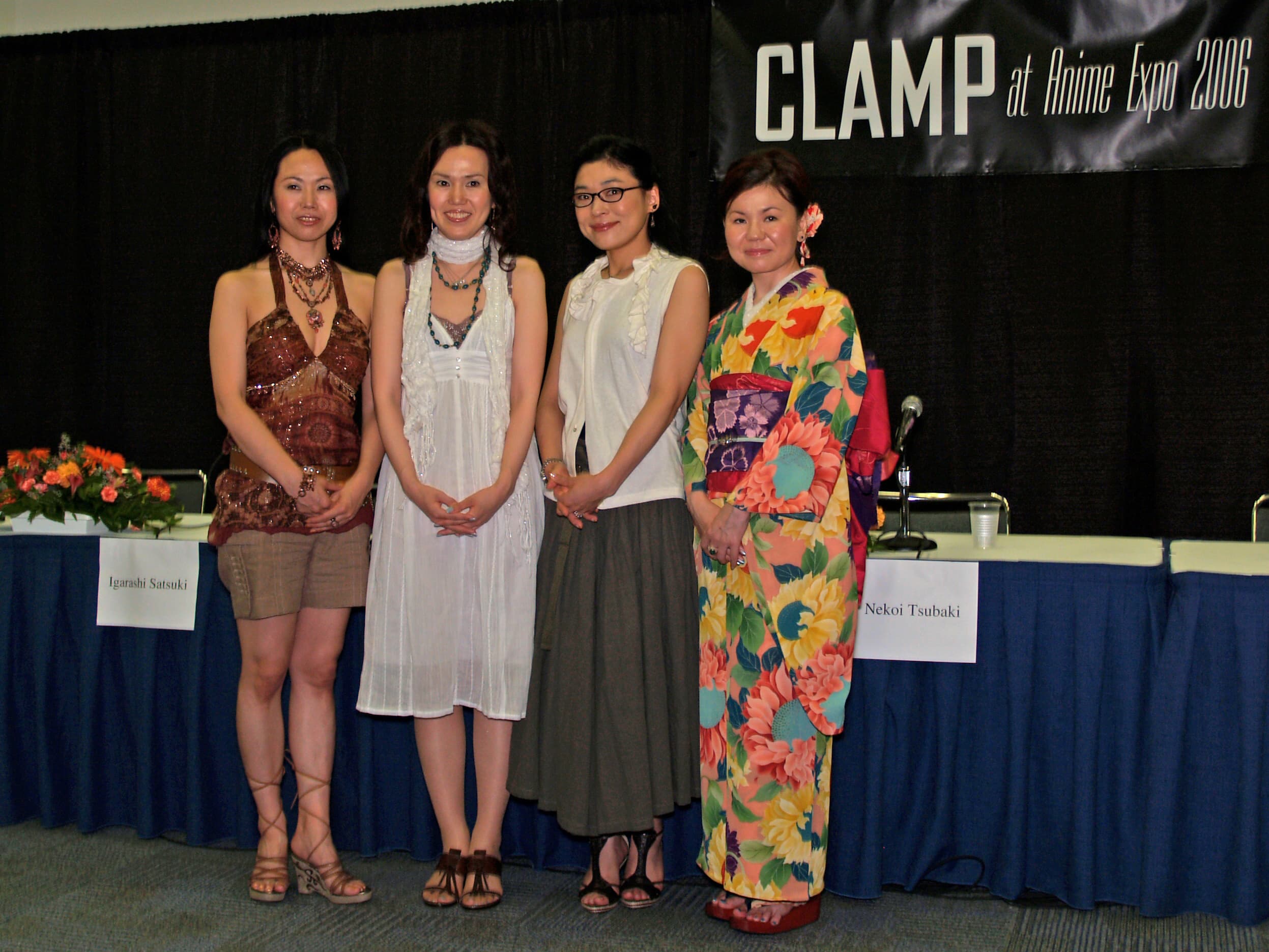
- CLAMP proved with Magic Knight Rayearth (1993–1996) and Cardcaptor Sakura (1996–2000) that shojo could be just as narratively ambitious as any shonen.
- Natsuki Takaya launched Fruits Basket (フルーツバスケット, 1998–2006, 23 volumes, Hana to Yume), the story of Tohru Honda and the Soma family cursed by the spirits of the Chinese zodiac. The work won the Kodansha Manga Award in 2001, a remarkable feat for a manga not published by Kodansha, and became one of the best-selling shojo of all time.
- Yoko Kamio created Boys Over Flowers (Hana Yori Dango, 1992–2004, 37 volumes), a phenomenon that spawned live-action drama adaptations in Japan, South Korea, China, and Taiwan.
Professor Yukari Fujimoto (Meiji University) identifies a turning point in 1990s shojo: influenced by the Gulf War and the economic crisis, heroines no longer settled for falling in love. They fought to protect the fate of a community. Red River (1995–2002), Basara (1990–1998), Sailor Moon, Magic Knight Rayearth: in these works, the bonds between women are "stronger than the bonds between men and women."
The 2000s: Shojo Conquers the World
The Cross-Media Era
The 2000s transformed shojo into a cross-media machine. A hit manga was no longer just a manga; it was an anime, a live-action film, a television drama, a video game, a merchandising line, a soundtrack. Publishers structured their launches around this multiplatform logic.
The decade's hits illustrate this strategy:
- Ai Yazawa published Nana (2000–2009), a dual portrait of two young women named Nana in the Tokyo of fashion and rock music. Over 50 million copies sold, two live-action films, an anime, and an aesthetic influence that spilled far beyond manga into fashion and music.
- Aya Nakahara created Lovely Complex (2001–2006), a romantic comedy about a girl who is too tall and a boy who is too short.
- Tomoko Ninomiya published Nodame Cantabile (2001–2010), a hilarious and moving dive into the world of classical music.
Older series found a second life through adaptations: Attack No. 1 returned as a drama, Boys Over Flowers became a pan-Asian phenomenon through the Korean drama adaptation.
Shojo Goes International
The translation of manga into English, which began in the late 1990s, revealed an untapped market: the Western female audience, largely ignored by the American comic book industry. Sailor Moon, Boys Over Flowers, and Fruits Basket became best-sellers.
Viz Media launched the Shojo Beat imprint, both a magazine (2005–2009) and a publishing label, popularizing shojo in North America. In France, shojo established itself through publishers like Kana, Delcourt/Tonkam, and Pika Edition, which released Nana, Fruits Basket, Cardcaptor Sakura, and dozens of other titles.
The 2008 financial crash hit the translated manga market hard, but the recovery in the 2010s confirmed shojo's foothold in the international landscape. Even though shonen dominates sales, shojo lines remain solid across all major publishers.
New Trends: Moe, Commercial Boys' Love, and Shojo for Boys
The 2000s also saw the emergence of hybrid magazines targeting anime and boys' love fans: Monthly Comic Zero Sum (2002), Sylph (2006), Comic Blade Avarus (2007), with a moe (萌え) aesthetic, that tender affection for cute characters, and bishonen protagonists who deconstructed shojo conventions with knowing self-awareness.
A more unexpected phenomenon: the rise of "boys' shojo manga," with magazines like Comic High! (2004) and Comic Yell! (2007) targeting a male readership drawn to shojo's aesthetic and narrative codes. The boundary between demographics, which CLAMP had already blurred in the 1990s, faded a little more.
Shojo Today: Alive, Diverse, Global
Twenty-first century shojo manga is an archipelago of subgenres where every reader can find their island:
- Contemporary romance: Ao Haru Ride (Io Sakisaka, 2011–2015), Kimi ni Todoke (Karuho Shiina, 2005–2017), Hirunaka no Ryusei (Mika Yamamori, 2011–2014); the school romcom reinvents itself with more assertive heroines and more complex romantic dynamics.
- Fantasy and isekai: Yona of the Dawn (Mizuho Kusanagi, since 2009), the epic of a fallen princess who learns to fight, fuses adventure, politics, and romance in a setting inspired by ancient Korea.
- Horror and thriller: the female supernatural continues to thrive.
- Magical girl: Cardcaptor Sakura: Clear Card (CLAMP, 2016–2024) proves the genre can still renew itself.
- Boys' love: now a full-fledged industry with its own magazines, conventions, and a global audience.
Shojo is no longer exclusively Japanese. Its influence can be read in Korean manhwa (True Beauty, The Remarried Empress), Chinese manhua, and even Western comics and animation. The French series Miraculous (2015) and the Italian Winx Club (2004) are direct heirs to the magical girl tradition.
Why Shojo Matters
Shojo manga accomplished something rare in the history of narrative arts: it created a space where women tell stories for women, using a visual language they themselves invented.
It gave manga its boldest graphic innovations: shattered panels, narrative white space, visual interior monologue. It explored gender, sexuality, identity, and human relationships with a freedom that few Western media can claim. It proved that comics could be both beautiful and profound, accessible and demanding, popular and subversive.
Above all, it told millions of readers, female and male, that their emotions mattered. That interiority is not weakness. That human relationships are the most important subject there is.
From the Shojo-kai of 1902 to the webtoons of 2026, the thread has never been broken. Shojo continues to reinvent itself, push its boundaries, and shape new generations of creators. Its story is not over; it is only beginning a new chapter.
Shojo manga was never "comics for girls." It is comics by girls, for everyone willing to see the world through the heart.
Photo credits: the images used in this article come from Unsplash and are royalty-free.
Written by Chloé
Passionate about East Asian cultures, otome games and shojo manga. Every article is a deep dive into what I love.